

Nitrous oxide - ‘nangs’ are safe, right?
There has been a big increase in the number of people suffering serious health consequences from using nitrous oxide
Hospitals are seeing an increase in the number of people presenting with harm related to nitrous oxide use
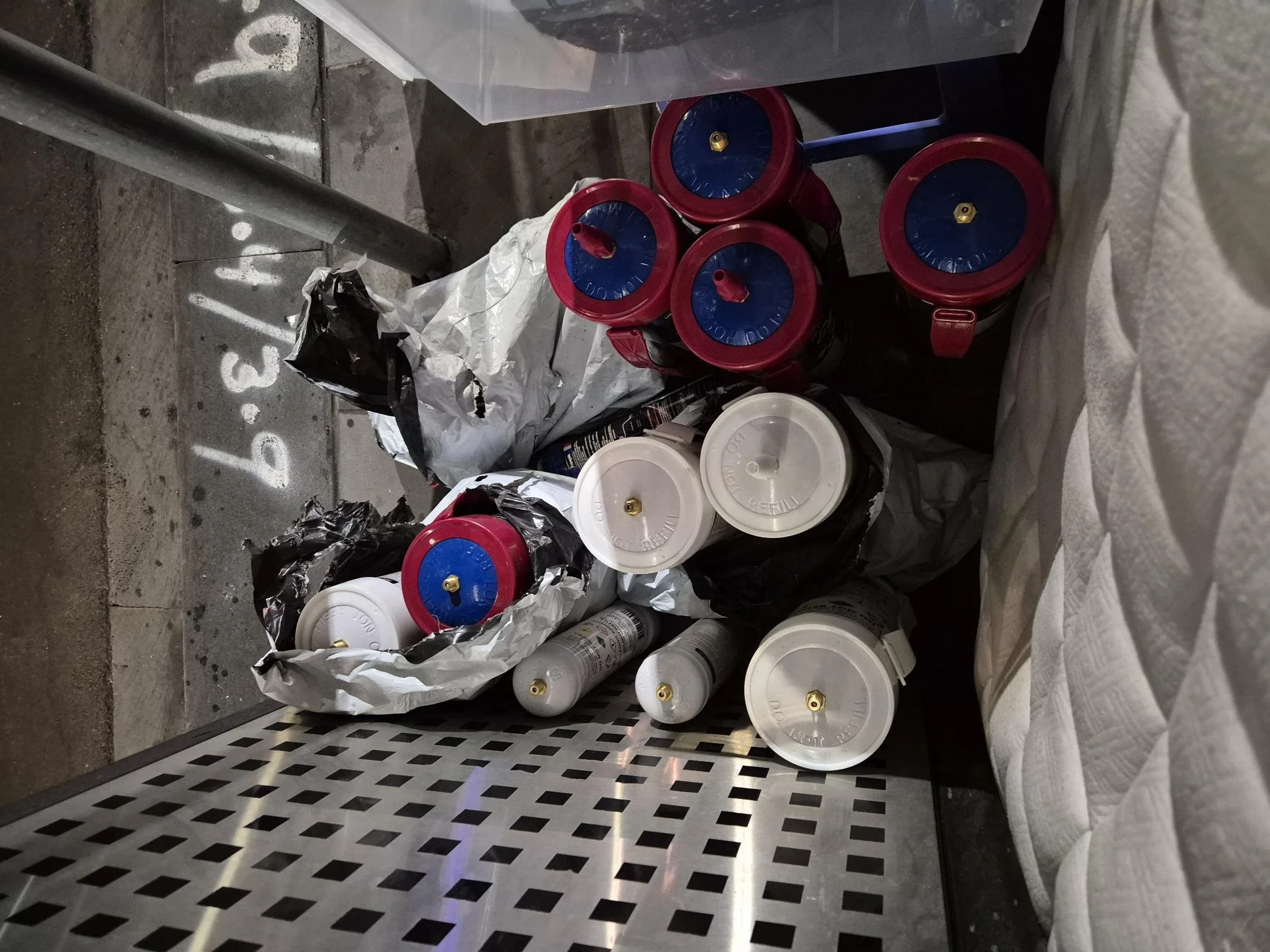
Large nitrous containers in a city bin. Credit: Caine Barlow
But I thought it was safe?
Nitrous oxide use can cause a range of problems, several of which often leave irreversible damage. Some of these are related to nitrous oxide’s inactivation of Vitamin B12:
Subacute combined degeneration of the spinal cord:
The insulation around the nerves in the spinal cord (myelin) breaks down, leading to nerve cell death which often leaves permanent damage
Causes changes in sensation (numbness, tingling)
Causes changes in balance and co-ordination
Leads to weakness or paralysis as signals to the muscles become weaker
Often does not fully recover even with treatment, leaving some people with difficulties walking or requiring a wheelchair
Peripheral neuropathy
Myelin around peripheral nerves (like of the hands, feet and ends of the limbs) breaks down so they don’t work properly
Causes issues with sensation including tingling, numbness and pain
Can also affect balance when proprioception is impacted
Often does not fully recover even with treatment
Anaemia
B12 is important for the production of haemoglobin and red blood cells, which carry oxygen in the blood. Low B12 levels can lead to anaemia which can cause fatigue and lead to other issues
How does nitrous oxide cause Vitamin B12 deficiency?
Nitrous oxide inactivates Vitamin B12 by oxidising a cobalt atom in the molecule
This inactivation is permanent. The inactivated B12 cannot become functionally active again
So nitrous oxide does not cause a true deficiency, and inactivated B12 will still be measured on B12 tests, which can look normal even when functional B12 is low. The inactivated B12 cannot be used in the processes it is important for, many of which relate to maintaining the myelin sheath, as well as for red blood cell production
Insufficient active B12 leads to a methionine deficiency. Methionine plays a range of important roles in cellular metabolism
Insufficient active B12 also leads to a buildup of toxic chemicals like homocysteine and methylmalonic acid. High homocysteine levels can lead to inflammation and problems with blood vessels, increasing risk of heart attack and stroke. Methylmalonic acid is toxic to nerves
Can I take vitamin B12 supplements to prevent damage?
No. Because nitrous oxide inactivates the B12, taking supplements doesn’t stop the risk. However, having lower levels of B12 to begin with will increase the risk, as less nitrous oxide will be required to inactivate all available B12. B12 deficiency is common, affecting an estimated 3.6% of the general adult population, with up to 26% having low-normal levels. Rates of deficiency are higher in younger people, older people and some other populations. Some health conditions can also cause B12 deficiency
Even taking methionine, which is used with B12 when treating nerve damage from nitrous oxide, will not totally prevent the damage
Having adequate B12 and methionine levels can help reduce the risk of this type of damage, but will not prevent it, especially if binging large amounts or using regularly
Nitrous containers can get cold, can that cause injuries?
Frost burns are common from nitrous oxide use. As the gas is released, the vessel (tank/nang) rapidly cools, often forming frost on the outside. These cold burns are common on the hands, particularly when using a cracker. They are also common on the thighs from holding tanks between the legs, and the mouth especially when inhaling directly from tanks
Pressure damage to the lungs can occur if inhaling directly from a tank, cream charger (‘bulbinator’) or cracker.
Using a balloon can help reduce the risk of burns and pressure injury. Gloves should be worn if using a cracker and you should never inhale directly from a cracker
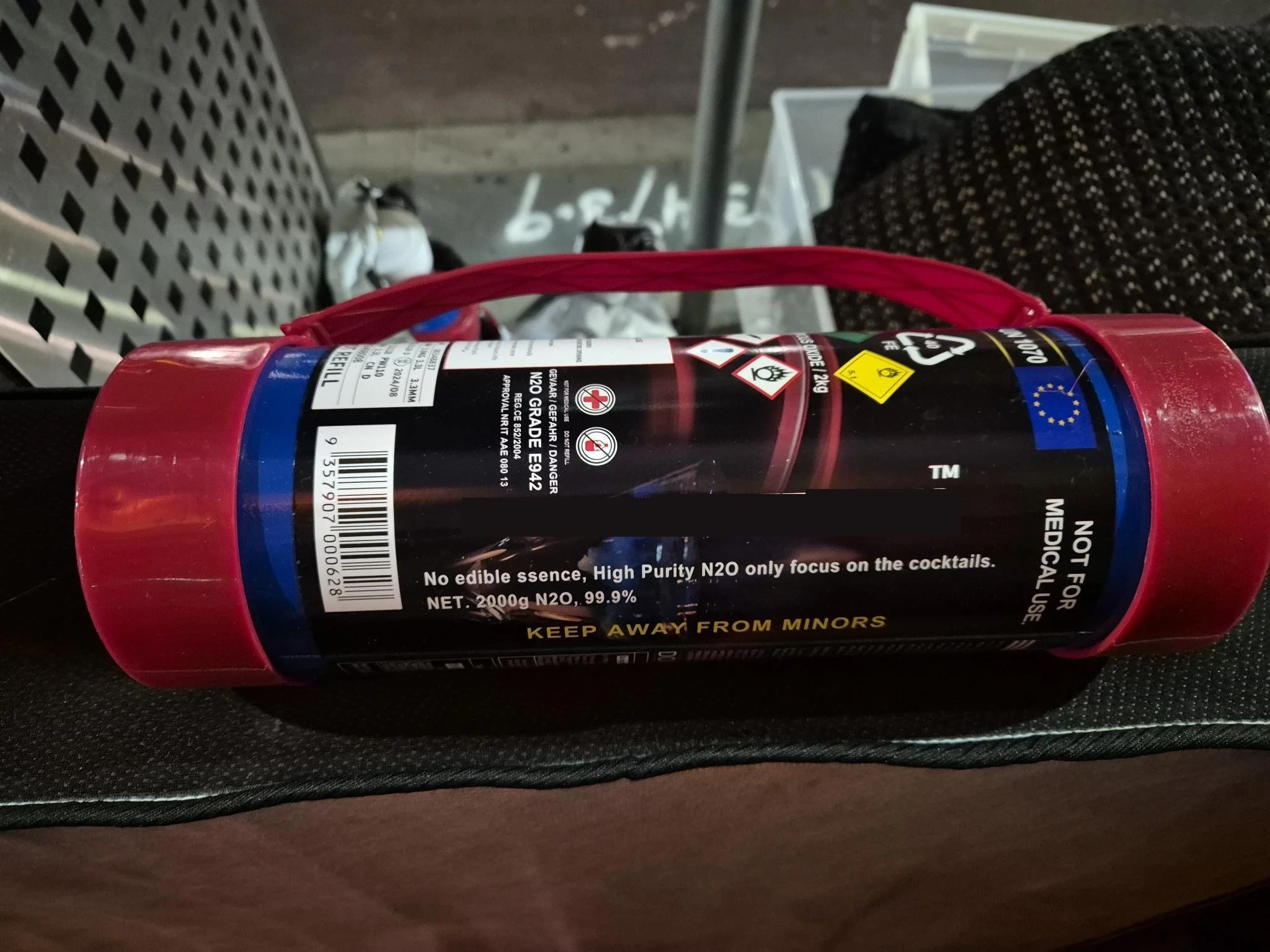
One of the common sizes of nitrous tank on the market - containing around the equivalent of 250 single cream charger bulbs. Even larger sizes are available now. These larger tanks being more available has coincided with increasing hospital presentations with neurological damage and frost burns. Credit: Caine Barlow
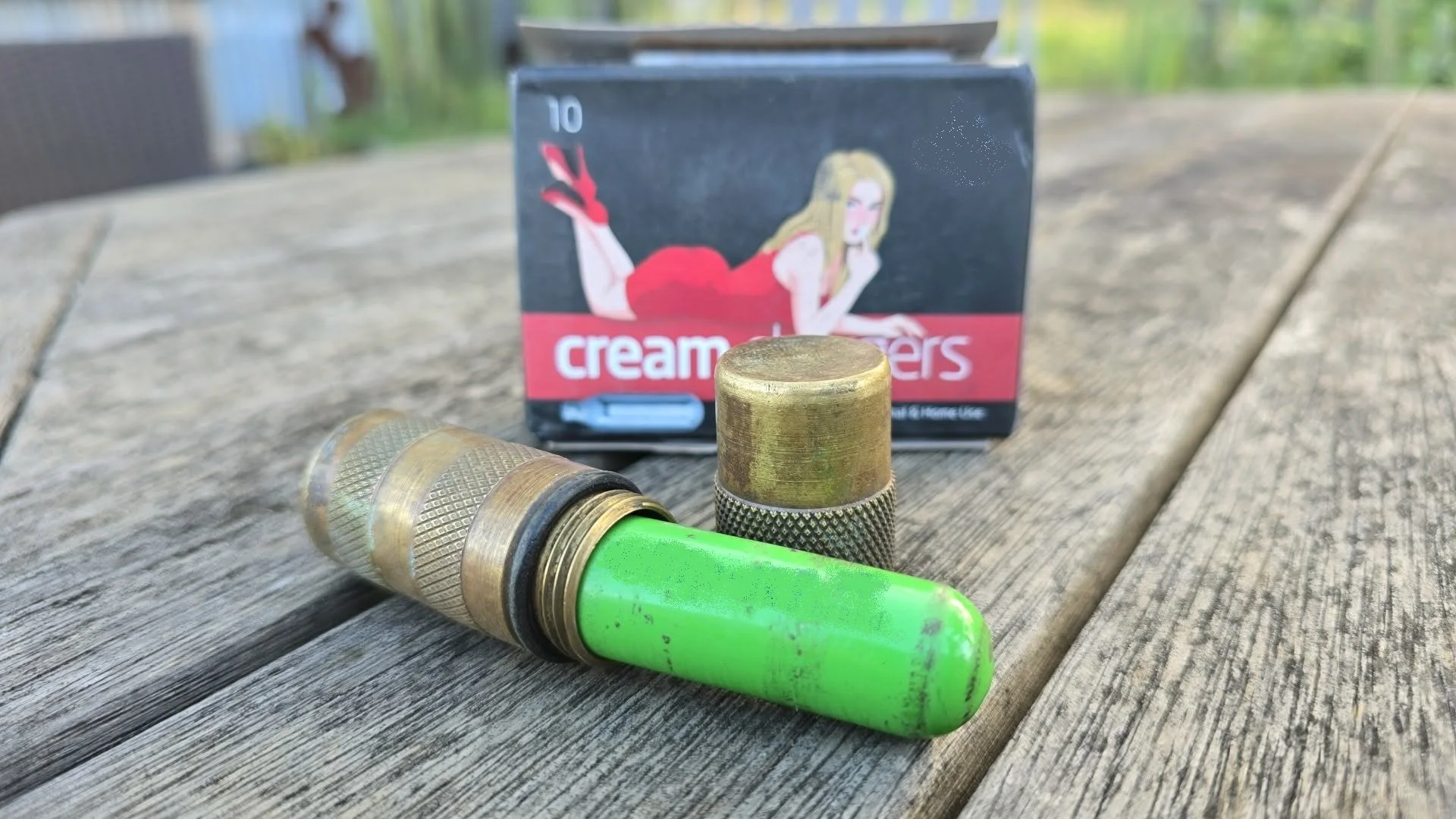
A cream charger ‘bulb’ in a ‘cracker’. These crackers get extremely cold when used, and release the gas without any regulation. They must be used with a balloon and often cause frost burns unless wearing gloves.
I’ve seen someone go blue inhaling nitrous before, why does that happen?
Nitrous oxide can displace air from lungs because it is heavier
Holding it in means too little oxygen is available in the lungs to absorb properly
This reduces the level of oxygen in the blood, which can cause unconsciousness, seizures and damage to the brain
Repeated episodes of low oxygen can lead to progressive damage to the brain
Never open a nitrous canister in a closed space. People have died doing this due to lack of oxygen once the nitrous displaces enough of it
Never combine nitrous with other drugs that can alter oxygen absorption of use in the body, like amyl nitrate or solvents, or those that can slow breathing like opioids, benzodiazepines or excessive alcohol
Is nitrous use bad for the lungs?
Inhaling pressurised gas, such as directly from a tank, cream charger or cracker, can injure the lungs
Nitrous that is sold primarily for recreational use (i.e not medical or regulated culinary products) varies in quality. It is possible that some products contain potentially harmful byproducts. It is also common for these products to contain some residues or oils from the manufacturing process, which often come out with the gas (you may see this in a bulbinator after use, or on a cloth held over the outlet of the tank/device)
How much nitrous does someone have to use before it can cause problems?
Most of the nerve and brain damage has been associated with using fairly large amounts quite regularly over a period of days to months
There have been some cases reported with far lower amounts of exposure, like a single binge session
It is hard to know how much will be too much. Some people may also experience more progressive damage over time rather than a sudden onset of serious symptoms
Why are more people experiencing serious harm from nitrous oxide use, when it has been around so long?
Larger tanks mean people are often using much more
Home delivery may also mean people are using more
More people are becoming regular users, sometimes developing a daily pattern of use that they find it hard to stop. More people are seeking professional support because their nitrous use is becoming something they feel is problematic
How can I reduce my risk?
The main way to reduce your risk of harm from nitrous oxide use is to limit how much you use in a session and not use it regularly. It is impossible to say how much is too much, because everyone is different, but less is always safer
It is easier to use less if you use bulbs rather than tanks
Use a balloon to inhale the nitrous rather than inhaling directly from a canister. Never inhale directly from a cracker
Do not share balloons. Lots of saliva and moisture from the lungs gets into the balloons, which risks spreading infection
Consider filtering the gas through a clean cloth to remove oily residues. This can be placed over the outlet before putting the balloon on
Be careful of cold burns, use gloves with a cracker and fill balloons with tanks on the ground
Never expose nitrous to flame or heat, it is highly flammable. Nitrous bulbs/tanks will explode violently or turn into projectiles if heated. Do not attempt to defrost tanks with heat - they will defrost with time (and if they have frozen up, it might be time for a break anyway)
Ensure your body has enough vitamin B12 and methionine. Remember that tests for B12 level can look normal even when nitrous has inactivated all the reserves in your body. Tests need to include homocysteine or methylmalonic acid. Normal levels do not mean nitrous use isn’t causing harm or protect from harm with future use
Remember that taking extra B12 and methionine will not prevent the chance of damage completely
Never open a canister in an enclosed space - nitrous will displace the oxygen and render people unable to escape the space, which has killed people
Rebreathing nitrous from a balloon (repeatedly inhaling from and exhaling into a balloon) is common, but does increase exposure to nitrous oxide and prolongs time with lower levels of oxygen, increasing the risk of harm. Minimise time doing this
Take breaks between each nang, avoid holding your breath for too long and don’t combine them with other things that can reduce blood oxygen like solvents or amyl nitrate
If you start to get symptoms of nerve damage like those described above, don’t use any more and seek medical care immediately. Earlier treatment is more likely to lead to more complete recovery

A ‘bulbinator’ or cream charger with a balloon applied to the outlet, under the cautious eye of a harm reduction hound.