
The acid trip in Turn Left at Venus
by Inez Baranay
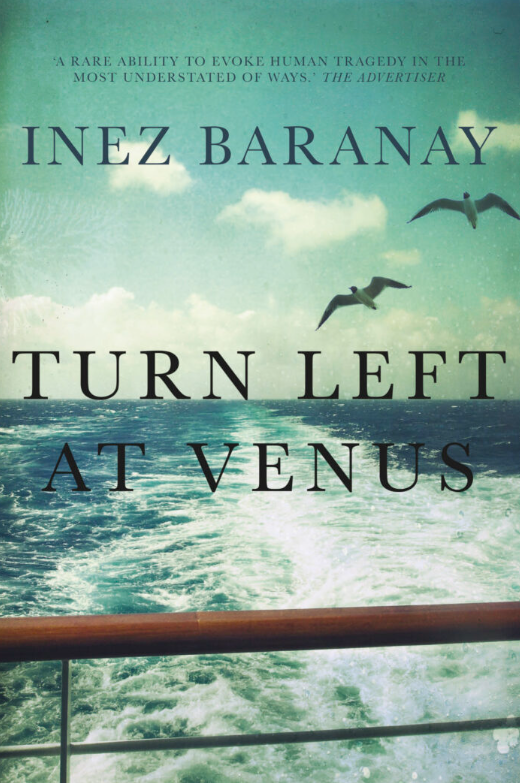
Turn Left at Venus is a novel by Inez Baranay, published in 2019 by Transit Lounge.
What follows is a section of the chapter “were we the dead?” which describes an acid trip experienced by the main character, Ada, then aged around 30, in San Francisco in the mid 1960s [pages 171 to 176 in the published book].
Although the author never tripped in San Francisco and not quite that early, this imaginative creation is based on real and positive experience of acid trips, the first being aged 18 in 1967.
This excerpt from the novel was submitted to My Psychedelic Experience, an Australian Psychedelic Society project that aims to publish personal accounts of psychedelic experiences from a diverse cross-section of the community. In sharing their accounts, we hope to humanise the people who use psychedelics, reduce stigma, and educate the public about the wide range of experiences that psychedelics can bring about.
The band’s name meant that those who had died were grateful to those who let them go, who eased their passage from this life to the beyond. Down at the park the crowd grew, and the music kept on going, the musicians playing on a stage far away. Leyla had the tiny pieces of blotting paper. Just swallow it. She had taken a trip before, in LA or somewhere near there. The purifying desert. Ada and Leyla found themselves on a grassy slope, the band and the crowd at a distance below them. For a while they only laughed, the clouds above spinning in the shapes and sounds of their laughter, Ada feeling her face break apart as she laughed, making her laugh harder. Breaking apart over and over but still there to keep breaking apart. Then laughter turned to a deep sigh, the music sighing through them, their sighs the breath of the cosmos. It was the way it always was when it was the two of them, they were a twosome inside an impenetrable barrier, no-one else would ever find a way to admittance, others did not dare, or took their pleasure in leaving the two to be how they were. How splendid the two of them were, lying on the grass in the big golden park. Rainbows and revelations whirled around them, in more dimensions than they’d ever known, they saw the same ones. Aeons passed in a moment, you could get inside moments and find them stretched to vast tracts of time in which worlds were created, bloomed, declined. They touched their future knowledge, knew for a while everything that could be known. The music came from pure divinity and pure embodiment, spiralling in colours in the air. They looked upon each other with something that combined fresh amazement with deep familiarity, gods beholding their own creations, wiser than wisdom.
A long time later they wandered further into the park, stopping at a water fountain, splashing themselves and drinking a little; water was the entirety of the sustenance they ever wanted. They were at their pinnacle, while they were calmer too, now, the undulations of the world gentle, infinitely beneficent.
The park extended, paths stretched through gardens and fields and encircled an occasional building. It was all vivid, supernaturally so but it was what nature was, every blade of grass in the lawn and every leaf on the trees and every flower in the flower beds glowing and vibrating with the pure energy that was the only substance in existence. The people who occasionally passed them were also in a psychedelic haze, and they greeted each other with deep recognition, wordless, requiring no sign. Things meant whatever you made them mean.
Ada would always remember two teenage boys in jeans, one had patches of bright fabric sewn on his jeans; it was something about the way they were together that mirrored her and Leyla’s one-ness; the way they all smiled at each other, in recognition of the bliss.
*
The sun disappeared behind clouds.
They were sitting upon a wooden bench.
Staring into a flower bed.
At one flower.
This flower in the flower bed was bright with vivid colour and juicy with vigorous sap, but then look, all its pigment and sap were draining out, the whole process taking place in one slow blink, the flower was now colourless, dried up, crumpled, ready to be buried and disintegrate where it once arose. Something of it will become part of the soil, feed another flowering plant.
The people who walked by were briefly blooming. The dead were all around us. Everything was going to die. You’ve always known but not really known, only known as a thing that is known, not as thing that you yourself know with your knowing, as if knowing itself were making itself clear to you. Who could live all the time knowing this as clearly as this? Witch, mystic, priestess, scientist. Seeing the bright grass turn brown and crumble, blow away as dust in dry cruel wind. Ada looked up to see a group of people skipping and singing, coming off the pathway to the lawn behind the flower bed, and then pirouetting away and as they did their own life juice all went out of them, and the flesh was no more, and only their bones danced, just before finding out they were also going to crumble.
A moment of real horror then just look hard at it and it turns into dust, into nothing
*
Were we the dead?
To whom or what will we be grateful when we are dead?
When they began to talk it was about an insight they’d both had: that they were already dead, they had passed into the realm beyond.
They would continue to live their lives knowing they might not actually be in this world at all.
They might have already left it.
‘When we die,’ Leyla said, ‘it has to be like this.’
‘Like this,’ Ada agreed, meaning with fully awoken consciousness, with blissful integration.
Leyla said, ‘There is so much advice on how to live but who teaches you how to die?’
Ada said, ‘We should be taught a story about the best way to die.’
‘It has to be so beautiful, with everything that makes life beautiful.’
‘A celebration, a ceremony, a ritual.’
‘Music, beautiful clothes, a lovely place.’
‘I’ll write that one,’ Ada promised; this promise meant a great deal more to her than to Leyla.
*
‘It was the first drug I ever tried; San Francisco, when the band was new; in the park’.
‘LSD was your first drug. OK. With?’
‘Leyla. She came to visit for a couple of days, from L.A. Where were you?’
‘I took it in a prison-like house in the depths of winter,’ said Noemi. ‘And I knew I had to leave there and everything was about that. Great visuals with the cobwebs though.’
Ada remembered, ‘We talked about death. Death. Dying. How to die.’
Noemi said, ‘And you’re not even Mexican. ‘
*
In the evening they parted to get dressed again and met again at Leyla’s hotel and went to a club Leyla had the name of, a bar really, with an area for a band. Jazz, a trio, the piano guy was especially amazing. No-one else in here had also been in the park that day. Or would have believed that they had. Leyla wore a shiny sheath dress with colours that changed. Ada wore that cream suit from Charles.
That night Leyla said to Ada, ‘you know, you’re a cool cat.’ Because Leyla and Ada could trip out in the day in the park where the kids went and at night they’d be here with natural sophistication mellowing out with the glow still coming off things, colours still seen in waves, sipping on bourbon and listening to this adult music that constantly surprised you, with its melancholy and joy and surprises, could not be predicted, made a unique shape out of the moment. ‘We are cool cats,’ Ada said. They applauded the musicians louder than anyone and the pianist bowed in their direction. The day’s glow wafted off them and drenched everything in glow.
They parted at the end of the night, to have a good long sleep. About to crash so hard. Take a day to rest up. Eat well, extra sleep, do their own separate little chores. They’d meet the day after.
Disclaimer: This article provides information for educational purposes only, and is not intended as legal, medical, or professional advice. The views expressed in this article are the author’s, and don't necessarily reflect the views of the Australian Psychedelic Society or its members.